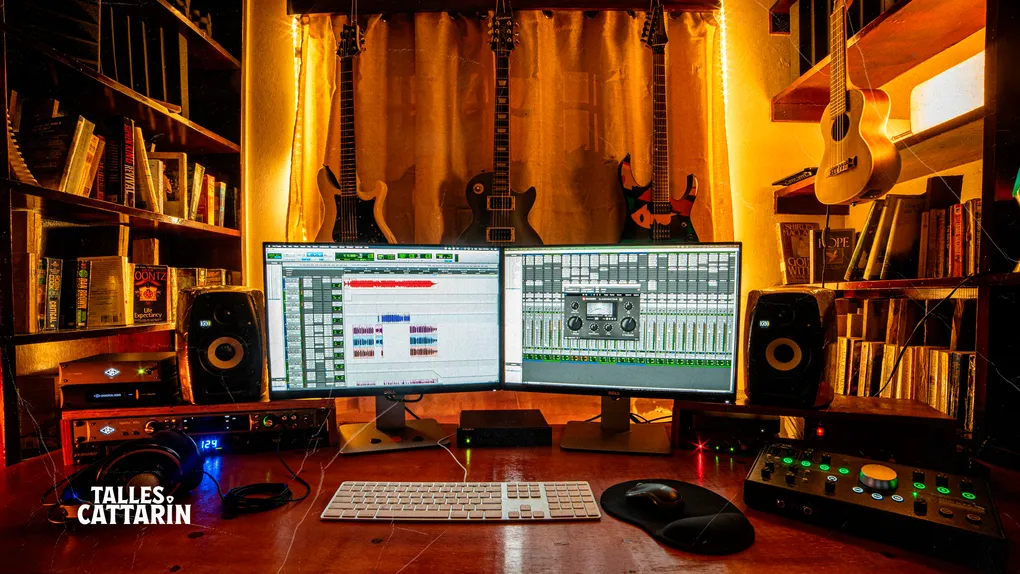
Demystifying Mixing and Mastering (And Why Your Tracks Need Them!)
Hey everyone! Greetings from Curitiba 🤘🏻.
If you follow my YouTube channel, you know I’m obsessed with taking classic tracks and flipping them on their heads with rock and acoustic reinterpretations. I love breaking a song down to its bones and building it back up in a completely new way. But here’s a secret: a great arrangement is only half the battle. The real magic that takes a song from a “cool basement jam” to a “massive stadium anthem” happens behind the screen.
I’m talking about Mixing and Mastering.
I get a lot of questions from fellow musicians about what these terms actually mean, so I decided to break it down. Plus, since I offer these services myself (for all genres, not just rock!), I figured it’s time to pull back the curtain.
What is Mixing?
Imagine you’re baking a cake. You have your flour, sugar, eggs, and chocolate. If you just throw them in a bowl and eat it, it’s going to taste terrible. You have to balance the ingredients, blend them properly, and make sure nothing overpowers the rest.
Mixing is exactly that, but for audio. It’s the process of taking all your individual recorded tracks (the kick drum, the bass, the rhythm guitars, the lead vocals, the harmonies) and making them play nice together.
- EQ (Equalization): We carve out frequencies so the bass guitar and the kick drum aren’t fighting for the same muddy low-end space.
- Panning: We move instruments left and right to create a wide, immersive soundstage.
- Compression & Effects: We control the dynamics so the vocal stays up front, and we add reverb and delay to create depth and atmosphere.
What is Mastering?
If mixing is baking the cake, mastering is the icing, the presentation, and putting it in the display window.
Mastering is the final polish applied to the already mixed track. It ensures that your song sounds amazing no matter where it’s played—whether your fans are blasting it in their car, listening on high-end studio monitors, or playing it through tiny phone speakers. Mastering brings the overall loudness up to industry standards (so it doesn’t sound super quiet when it plays next to Foo Fighters on a Spotify playlist) and adds a final “glue” that makes the whole track feel cohesive and professional.
Hear the Difference
Don’t just take my word for it. Listen to this quick comparison from a recent project I worked on.
Track A: The Raw Recording (Unmixed)
Notice how the instruments feel like they are fighting each other for space. The vocals get lost behind the guitars, the lower frequencies sound a bit muddy, and the overall track feels narrow and a little flat.
Track B: The Final Mixed & Mastered Version
Now listen to this. The low end is warm but tight, the guitars are crisp and spread wide, and the vocals sit perfectly on top, leading the whole track. It breathes, it has energy, and it feels alive.
Let’s Make Your Music Sound Huge
You put your heart and soul into writing and recording your music. Don’t let a muddy mix hold your songs back from reaching their full potential.
Whether you’re recording acoustic folk, heavy rock, pop, or indie electronic, I can help you take your raw tracks and turn them into release-ready anthems. I offer professional mixing and mastering services tailored to your specific vibe and vision.
Ready to level up your sound? Drop me an email or click the contact button below to get a quote. Let’s make some noise! 🎸